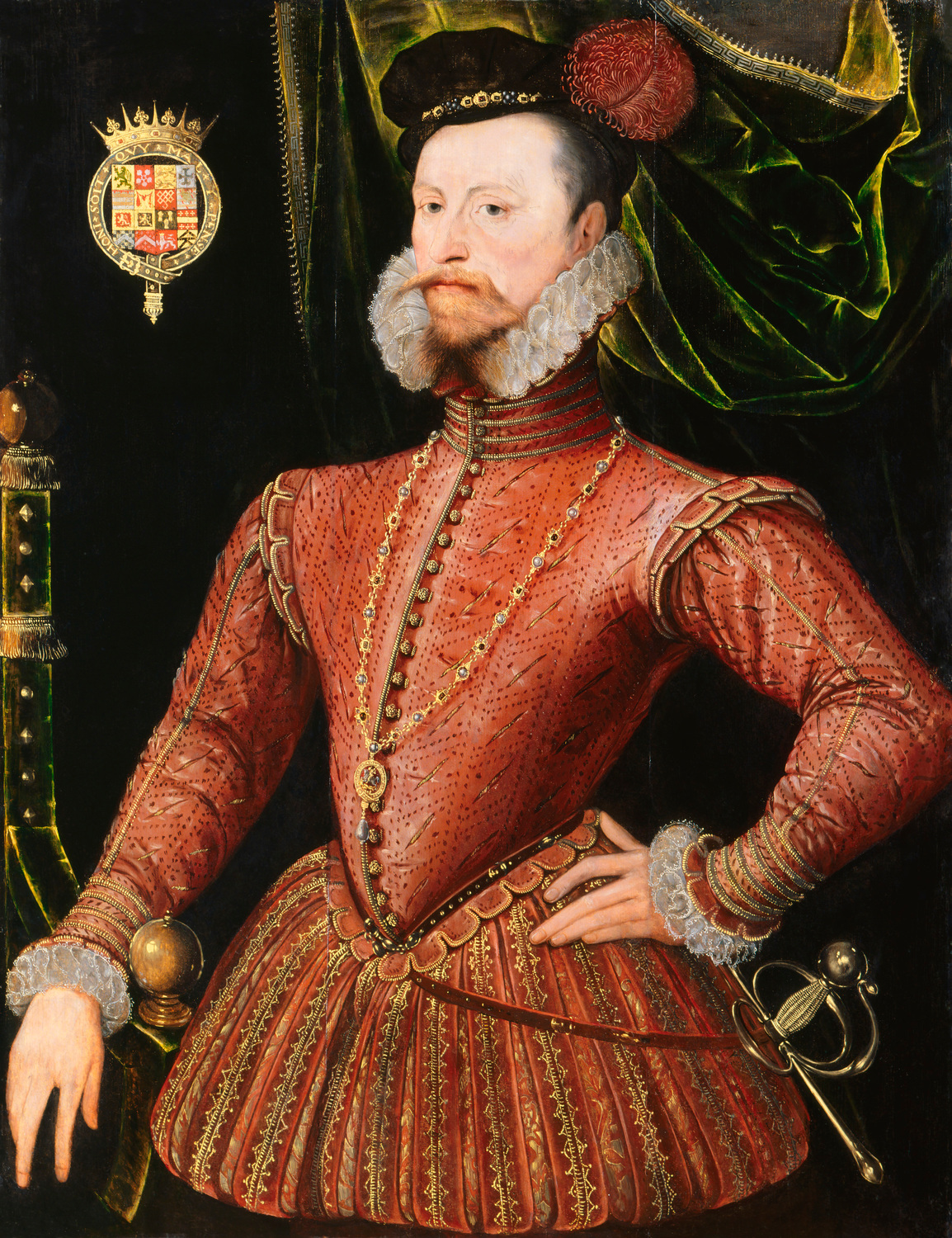

Robert Dudley
National Portrait Gallery c. 1575
NPG 447
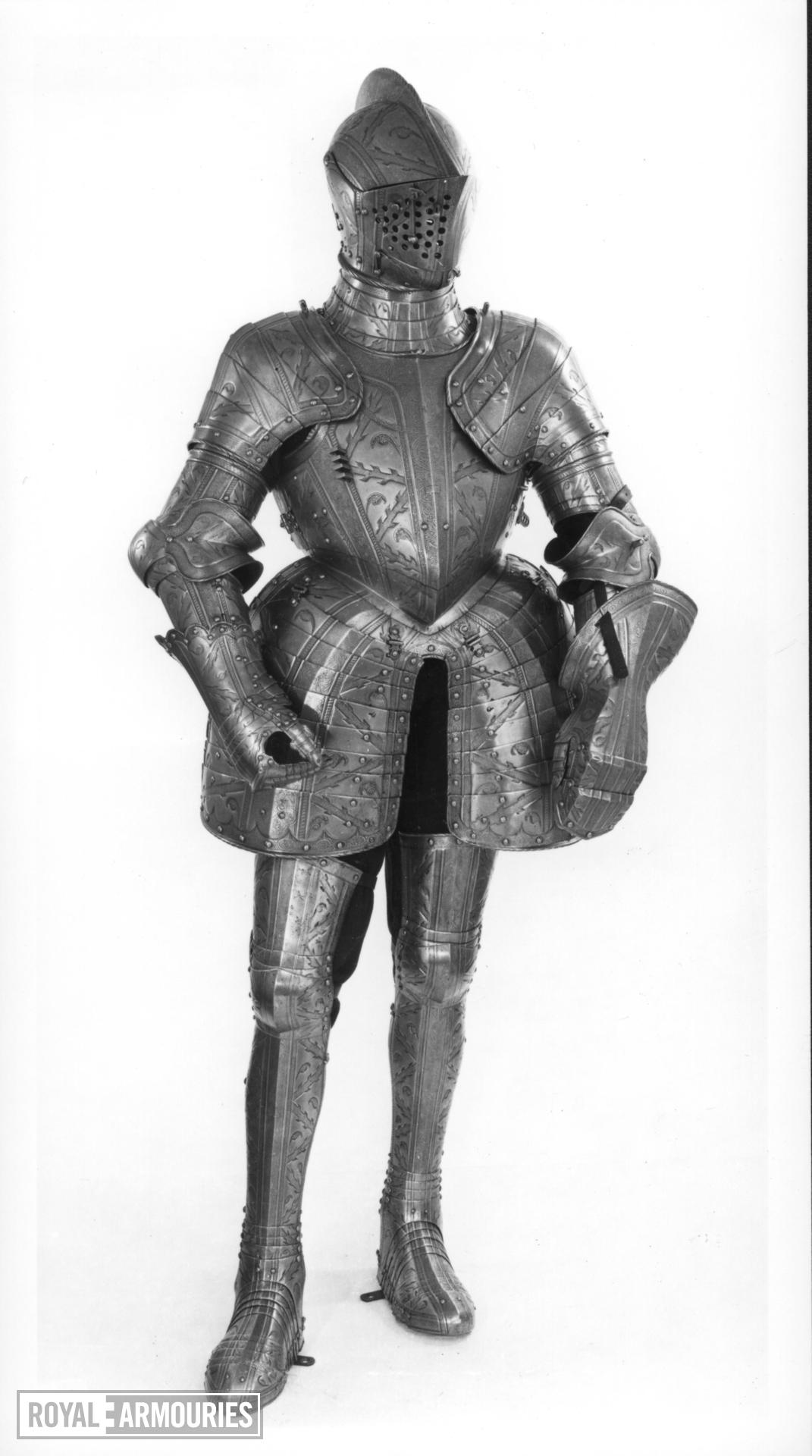
Armor of Robert Dudley
Greenwich c. 1570
Royal Armouries object number II.81
Breastplate circa 1580
inv. num. A-306
Changes in the shapes of breastplates in the 16th century Main Page Previous Page Next Page
| |
|
|
Robert Dudley National Portrait Gallery c. 1575 NPG 447 | Armor of Robert Dudley Greenwich c. 1570 Royal Armouries object number II.81 |
Breastplate circa 1580 inv. num. A-306 |
Moving on to the last quarter of the century, we see the typical form often called a "peascod" doublet.
The body shape built by the doublet has broad shoulders, a tall neck, narrow waist (at least side to side)
and the waist dips significantly at the front to a relatively sharp point.
The hips then sweep out wide.
Again, we can illustrate the connection between clothing and armor with pieces for the same person along with
a similarly shaped piece made for someone of lower rank.
Here we see Robert Dudley, Earl of Leicester. He was a a favorite of Elizabeth I, and he dressed the part
in his clothing and his armors. The portrait and armor are from about the same time (the 1570's) and we can
see the very direct translation of the doublet into the breastplate. The collar is reflected in the gorget,
the shoulders in the pauldrons, and the overall shape of the body directly translated to steel.
The idealized hip flare in the clothing is then reflected in the tassets.